

This article1 delves into the traditional salt production methods in Mankessim, Ghana, the environmental and economic impact of the industry, ongoing modernization efforts, and the challenges it faces. Are you interested in the economic potential of Ghana’s salt industry or looking to understand how traditional salt production can be modernized for sustainability? Do you want to explore the challenges and opportunities within the salt sector and how it contributes to local and national development?
By reading to the end, you will gain valuable insights into how sustainable practices, technological advancements, and community partnerships can drive growth, create employment, and enhance Ghana’s position in the global salt market.
Salt production in Mankessim, Ghana, has long been an essential part of the local economy and cultural heritage. This industry, which utilizes traditional seawater evaporation techniques, has provided employment opportunities, supported livelihoods, and contributed significantly to Ghana’s economy. However, the industry is now at a crossroads, facing environmental concerns, the need for modernization, and market fluctuations. This article explores the traditional methods of salt production in Mankessim, the environmental implications, the shift toward mechanization, and the challenges and opportunities that lie ahead.
The Traditional Salt Production Process
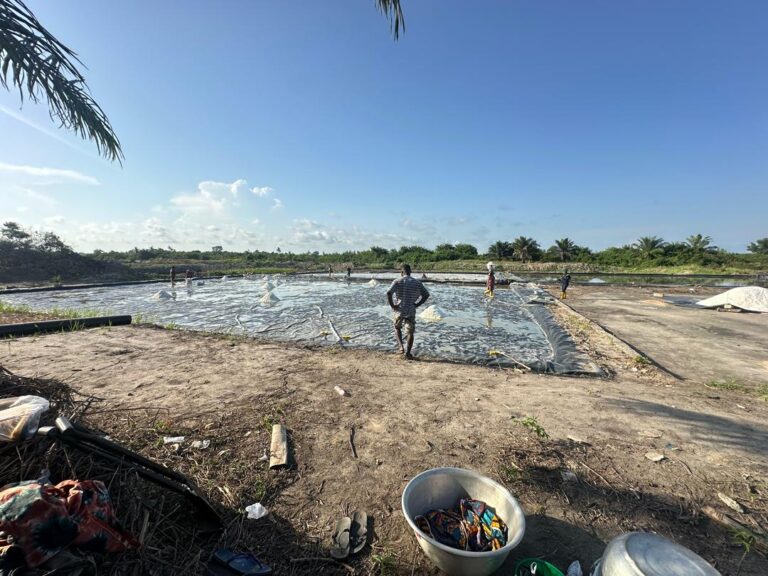
For generations, salt production in Mankessim has relied on a simple yet effective process of evaporation, using manually dug ponds to extract salt from seawater. The process follows these key steps:
- Seawater Collection: Coastal waters are carefully directed into a network of shallow evaporation ponds, often through manually constructed canals.
- Evaporation and Crystallization: The intense sun and prevailing winds naturally evaporate the water over several weeks, leaving behind salt crystals.
- Harvesting: Local harvesters collect the salt manually using wooden shovels and woven baskets, often working in family groups.
- Post-Harvest Processing: The harvested salt undergoes washing and drying to remove impurities before being packaged and distributed to local and regional markets.
While effective, this method is labor-intensive and limited in scale. The reliance on manual labor and rudimentary infrastructure means that production primarily serves local demand, restricting growth potential.
Environmental Impacts of Salt Production
Despite being a seemingly natural process, traditional salt production has environmental consequences that require attention.
- Water Use: Over-extraction of seawater can alter the salinity of coastal waters, potentially disrupting marine ecosystems.
- Land Degradation: Large evaporation ponds take up significant land area, impacting biodiversity and coastal landscapes.
- Pollution Risks: The accumulation of salt residues and waste byproducts can lead to environmental pollution if not managed properly.
Sustainable water management, proper waste disposal, and recycling initiatives can help mitigate these challenges, ensuring that salt production remains environmentally responsible and viable in the long run.
Modernization of Salt Production in Mankessim
Recognizing the limitations of traditional methods, efforts are being made to modernize salt production in Mankessim.
- Mechanization: The introduction of pumps and harvesting machines is reducing reliance on manual labor and increasing efficiency.
- Improved Infrastructure: New evaporation ponds, constructed with durable materials and utilizing advanced techniques, are enhancing productivity.
- Market Expansion: With increased output and better quality control, Mankessim’s salt producers are now able to compete in both domestic and international markets.
Challenges Facing the Salt Industry
While modernization presents exciting opportunities, the industry also faces significant challenges:
- Climate Change: Rising temperatures and unpredictable rainfall patterns can disrupt the evaporation process, affecting salt yields.
- Market Fluctuations: The price of salt varies based on demand, impacting profitability and creating financial uncertainty for producers.
- Resource Management: Ensuring sustainable water use and minimizing land degradation remain key concerns for long-term industry stability.
Opportunities for Growth and Development
Despite these challenges, Mankessim’s salt industry has significant growth potential if strategic steps are taken:
- Technological Advancements: Research into improved evaporation techniques and energy-efficient harvesting can lead to higher productivity and better quality salt.
- Community Development: The industry can serve as a key driver of local economic development by creating jobs and generating revenue.
- Sustainable Practices: Responsible resource management and eco-friendly production methods can ensure long-term viability.
- Collaboration and Partnerships: Working with research institutions, government agencies, and private investors can promote innovation and best practices.
Conclusion: Embracing Innovation for a Sustainable Future
The salt production industry in Mankessim is at a turning point. While deeply rooted in tradition, it must embrace innovation to overcome environmental and market challenges. By adopting modern techniques, prioritizing sustainability, and fostering collaboration, the industry has the potential to create hundreds of jobs, contribute millions to Ghana’s economy, and position itself as a competitive player in the global salt market.
As efforts continue to modernize and expand the industry, it is crucial to balance progress with environmental responsibility. By harnessing the lessons of the past while looking toward the future, Mankessim’s salt industry can continue to thrive, benefiting local communities and contributing to national development.
- This article is based on a presentation by Frank Twum Barima Bosompem, Director and Partner of SalSalt Resources. ↩︎

Our leaders have failed the youth. Mankessim deserved better
Colonial mindset and Guggisberg economy wuill be the un doing of resource rich African countries
When is Africa going to take afull advantage of its mineral resources?