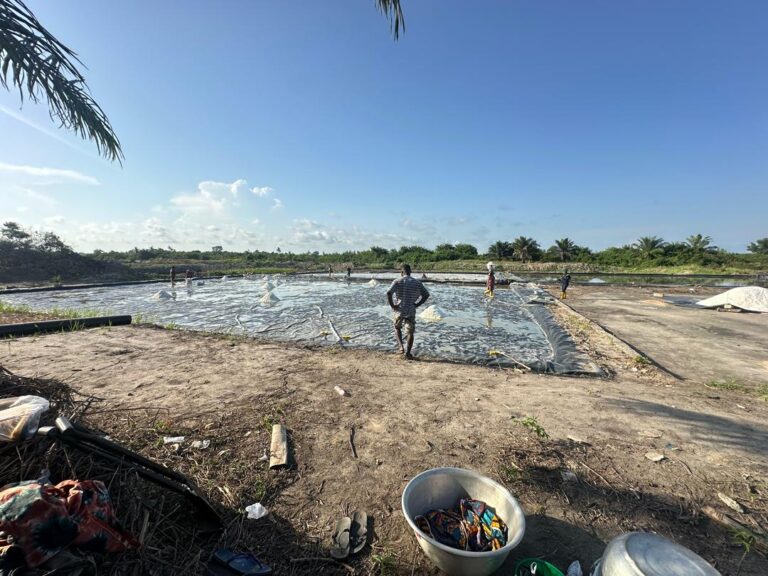
Are you curious about how traditional sea salt production in Mankessim, Ghana, impacts the local economy, environment, and community? Do you want to understand the challenges and opportunities in the industry and how sustainable practices can shape its future?
This article1 explores the traditional salt mining process, its economic significance, environmental concerns, and cultural impact, providing valuable insights into the industry’s role in Ghana’s development. By reading to the end, you’ll gain a deeper understanding of how salt production sustains livelihoods, the challenges it faces, and potential solutions for a more sustainable future.
Mankessim, a coastal town located in the Central Region of Ghana, is renowned for its traditional salt mining industry. The town’s salt production process, based on the evaporation of seawater, has been a key part of the local economy and culture for generations. While the industry continues to provide significant employment opportunities and contribute millions to the national economy, it faces challenges related to environmental sustainability, resource management, and market dynamics. This article explores the intricacies of Mankessim’s salt production, highlighting its economic benefits, environmental impacts, and the social importance it holds for the local community.
The Traditional Salt Mining Process in Mankessim
The method of salt production in Mankessim is rooted in tradition, relying on natural processes such as the sun’s heat to extract salt from seawater. The process begins with the collection of seawater from the Atlantic Ocean, which is then transported to a series of shallow evaporation ponds. These ponds are carefully designed to harness the sun’s energy to evaporate the seawater, leaving behind salt crystals. The salt harvesting process is done manually, with workers using shovels and buckets to collect the salt.
After harvesting, the salt undergoes washing and drying to remove impurities. Once the salt is purified, it is packaged and distributed to local markets and retailers across Ghana, ensuring a steady supply for local consumption and trade.
This traditional method is highly labor-intensive and relies on natural resources, making it an integral part of the local economy and culture.
Economic Impact: Job Creation and Revenue Generation
One of the most significant contributions of the salt mining industry in Mankessim is its economic impact. Salt production provides direct employment to thousands of people, both in Mankessim and surrounding communities. These jobs are essential to the livelihoods of many families in the region. The industry plays a pivotal role in maintaining the local economy by offering jobs across various stages of the production process, from water collection to salt harvesting, washing, drying, and packaging.
Beyond job creation, the salt mining industry also generates significant revenue. It is estimated that the industry contributes around 20 million dollars to Ghana’s national economy annually. This revenue supports local businesses and provides a vital income stream for families, further emphasizing the importance of the salt industry to the overall economic landscape of Ghana.
Environmental Impact: Water and Land Use Challenges
Despite the economic benefits, traditional salt mining practices in Mankessim come with their own set of environmental challenges. One of the most pressing concerns is the large amount of water required for the evaporation process. Seawater must be transported from the Atlantic Ocean into evaporation ponds, a process that demands substantial water volumes. This can lead to potential issues with local water resources, especially during dry seasons or periods of water scarcity. As the presentation points out, sustainable water management is essential to ensure the continued viability of the industry without depleting local water resources.
Another environmental concern is the extensive land use associated with salt production. The evaporation ponds cover a significant area of land, which may impact coastal ecosystems and biodiversity. Proper management of these areas is crucial to minimize any potential damage to the surrounding environment.
Moreover, pollution resulting from improper waste disposal and the management of byproducts of salt production remains an ongoing issue. There is a need for better waste management practices to ensure that the industry does not negatively impact the surrounding environment.
Social Impact: Cultural Significance and Community Development
Salt mining in Mankessim is not just an economic activity; it is a deep-seated part of the community’s cultural heritage. The process has been passed down through generations, and it continues to be a source of pride for the local population. The tradition of salt production has played a significant role in shaping the identity of Mankessim, with many families involved in the industry for decades.
In addition to its cultural significance, the salt mining industry contributes to community development. It provides jobs, income, and opportunities for economic growth, creating a stable foundation for the local economy. The industry sustains the community, supporting not only the salt miners themselves but also their families and local businesses.
Challenges and Opportunities: Looking to the Future
Despite the many benefits, Mankessim’s salt production industry faces several challenges. Climate change, water scarcity, and pollution control are some of the key issues that need to be addressed in order to ensure the sustainability of the industry. Climate change, in particular, poses a threat to the salt production process, as shifting weather patterns may impact evaporation rates and water availability.
Water scarcity is another major concern, as the production process requires large amounts of water, which could potentially lead to the depletion of local water resources. To mitigate these issues, the industry must adopt sustainable water management practices and explore alternative sources of water.
Pollution control is also essential for the long-term health of the environment. As the industry grows, it will be important to invest in better waste disposal methods and technologies that reduce the environmental footprint of salt mining.
On the flip side, modernization offers significant opportunities for improvement. By incorporating new technologies and practices, Mankessim’s salt production industry can become more efficient and sustainable. This could lead to better resource management, reduced environmental impact, and even higher quality salt products.
Conclusion: Ensuring Sustainability for the Future
Salt production in Mankessim remains a vital industry that has shaped the region’s economy, culture, and way of life. While it provides essential employment and revenue for thousands of people, it also presents challenges that must be addressed in order to ensure its continued success. Sustainable water management, better land use practices, and pollution control will be critical for the future of the industry. By embracing modernization and adopting more sustainable practices, Mankessim can continue to harness the benefits of salt production for years to come, contributing to both the local community’s development and Ghana’s national growth.
The story of salt mining in Mankessim is a testament to the resilience of the community and the importance of sustainable practices. As the industry evolves, it will undoubtedly continue to play a crucial role in the lives of many Ghanaians, preserving both the cultural heritage and economic prosperity of the region.
- This article is based on a presentation by Frank Twum Barima Bosompem, Director and Partner of SalSalt Resources. ↩︎